
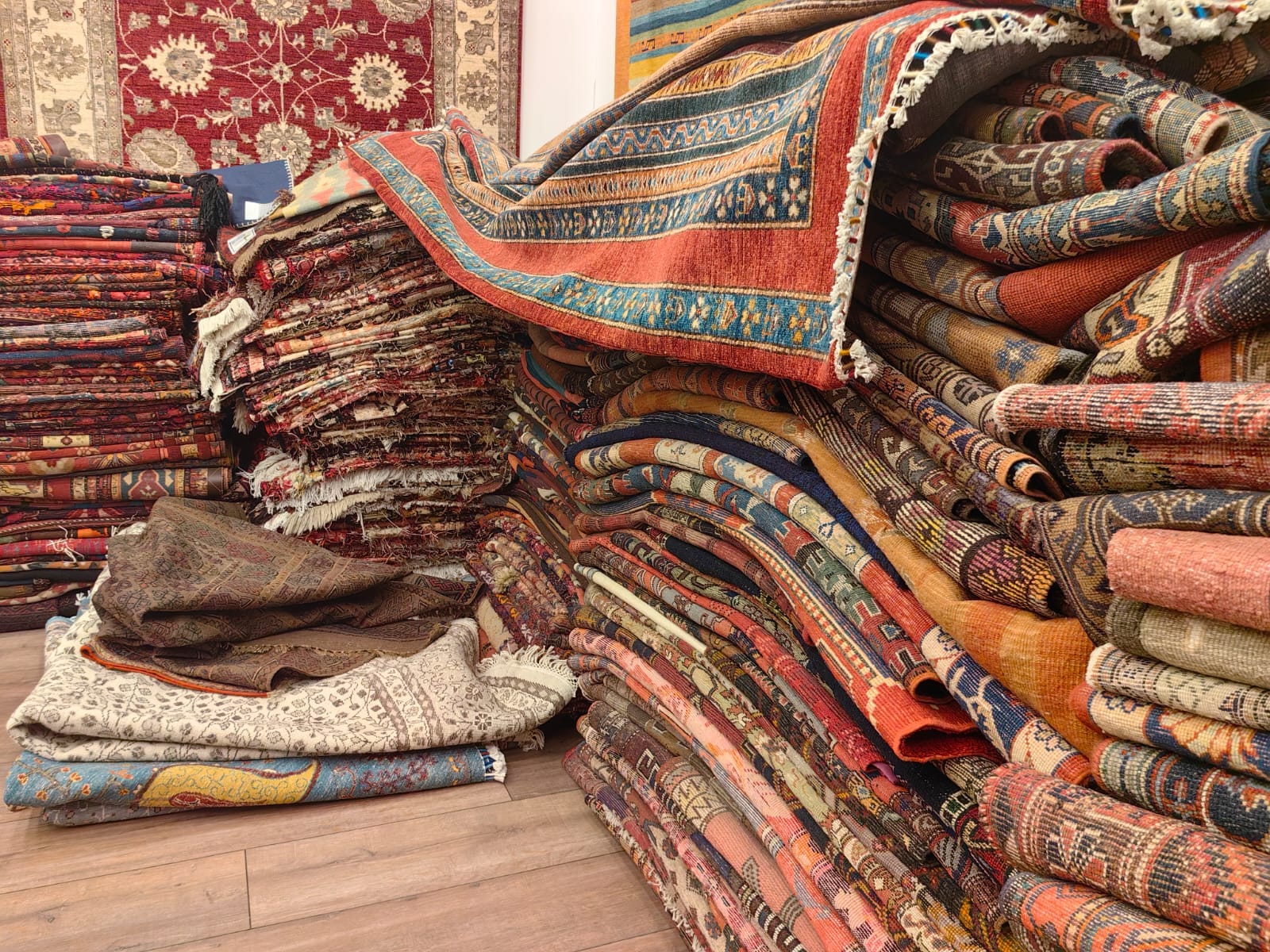
Carpet Shopping in Turkey is not just about buying a beautiful home decoration. Turkish carpets represent a centuries-old cultural tradition and stand as a powerful symbol of artistry, craftsmanship, and heritage. Whether you are a collector or a traveler looking for an authentic souvenir, understanding Turkish carpets will enrich your experience.
A Brief History of Turkish Carpets
Turkish carpets have a history that stretches back over a thousand years, originating with nomadic tribes and gradually evolving into works of art. Traditionally handwoven by skilled artisans using natural dyes and materials, each carpet tells a story, reflecting regional patterns, local folklore, and historical symbolism. Some of the oldest surviving examples, like the Pazyryk Rug, made around the 4th–3rd centuries BC and now preserved in the Hermitage Museum in St. Petersburg, reveal how long this art form has captivated people.
Centuries later, Anatolian carpets became so admired that they were immortalized in European Renaissance paintings, such as the Holbein rugs, named after Hans Holbein the Younger, known for their striking geometric medallion designs. In the Ottoman era, the sultans commissioned the luxurious Hereke carpets, crafted from pure silk or wool on cotton, to decorate the Dolmabahçe Palace and present as gifts to visiting royalty, noblemen and statesmen. Through the centuries, Turkish carpets have not only served as functional home décor but have also become treasured works of art, rich in culture, history and storytelling.
The value of a Turkish carpet is influenced by several factors:
Materials:
The three main materials used are wool, cotton, and silk. Some carpets combine materials, like wool with cotton, which does not significantly affect the price. Silk carpets are the most expensive because silk allows for finer and more intricate designs.
Knot Density:
The number of knots per square centimeter is a major factor in pricing. To assess a carpet’s value, look at the reverse side — small, dense knots indicate that the carpet took longer to make and allows for more detailed patterns.
Age/Antique Value:
Older carpets, especially well-preserved antique wool carpets, can sometimes be more expensive than fine silk carpets due to their rarity, historical significance and craftsmanship.
Pattern Complexity: Carpets with floral motifs or intricate designs are generally more expensive than geometric designs, as detailed patterns require more skill and time.
Labor and Craftsmanship:
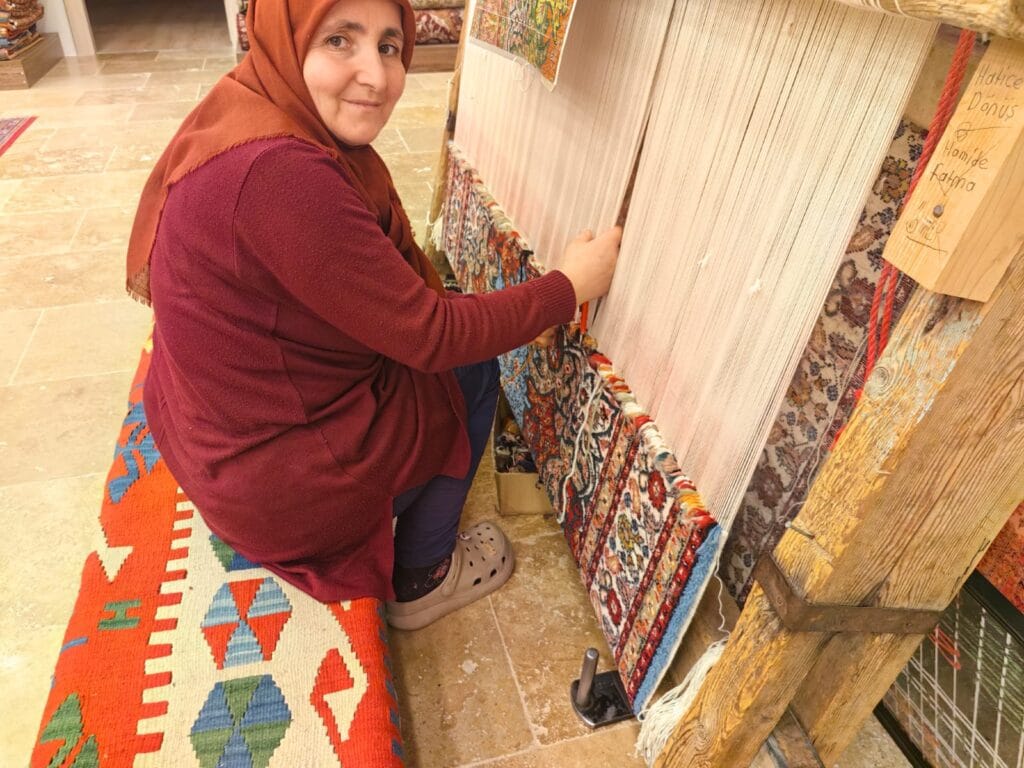
The skill and time required to weave a hand-made carpet is the most significant factor affecting price. Carpets are entirely handwoven, often taking months or years to complete, which is reflected in the cost.
A genuine hand-made carpet is not only a beautiful work of art but also a valuable investment.
Tourists’ Concerns When Buying a Carpet
Many tourists visiting Turkey want to buy a carpet but face common concerns:
Authenticity: Is the carpet truly hand-made or machine-made?
Fair Pricing: Am I paying a reasonable price for the product?
These concerns are understandable because bargaining is a standard part of Turkish culture. In most carpet shops, prices are negotiable, and most tourists are not familiar with local bargaining techniques, so they can never be entirely sure if their purchase is fair.
This is exactly where our company takes full responsibility. By recommending trusted carpet shops and using our expertise, we ensure our clients:
Receive a genuine hand-made carpet.
Pay a fair and transparent price.
Never feel pressured or tricked by bargaining tactics.
Because we take full responsibility, our clients can shop confidently and enjoy the cultural experience without stress.
What to Be Careful About When Buying a Carpet
Authenticity:
Do not believe salespeople who claim a carpet is “half hand-made, half machine-made.” A carpet is either hand-made or machine-made — there is no in-between.
Guarantee Certificate:
Always check the certificate to verify authenticity. Every genuine hand-made carpet must come with a company-stamped and signed guarantee certificate, which must clearly state 100% handmade.
Knotting Technique:
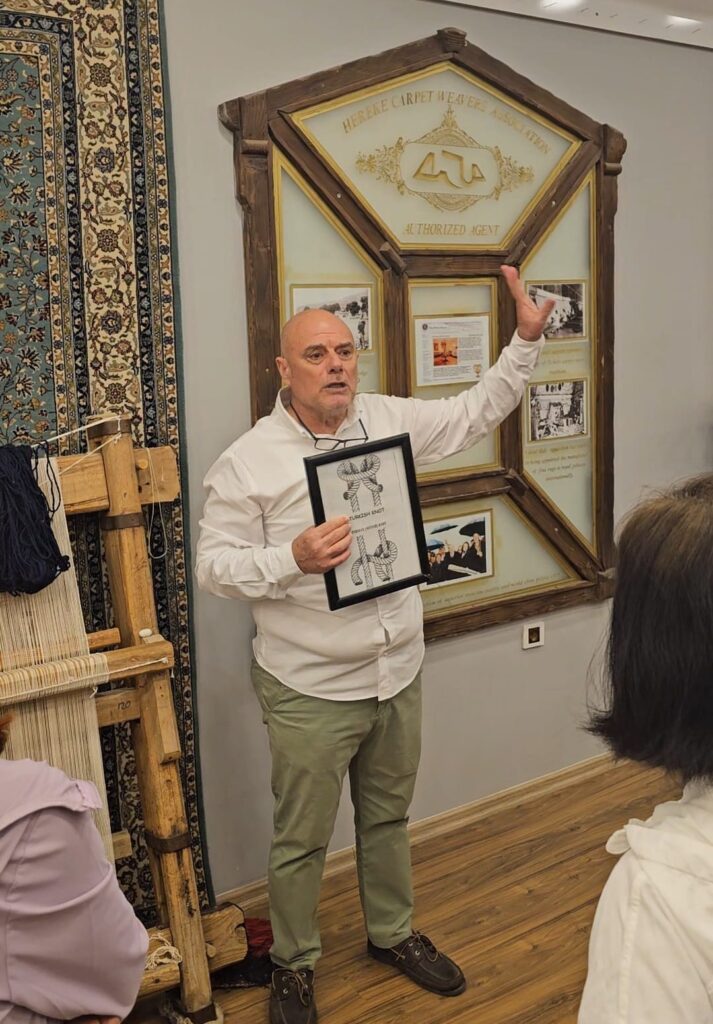
Ask about the materials and knotting technique. Double knot (Gördes knot) carpets are particularly durable and are a hallmark of Turkish craftsmanship — only Turkish carpets are made with this knot.
Investment Value:
A genuine hand-made carpet is an investment, as high-quality pieces are becoming increasingly rare worldwide.
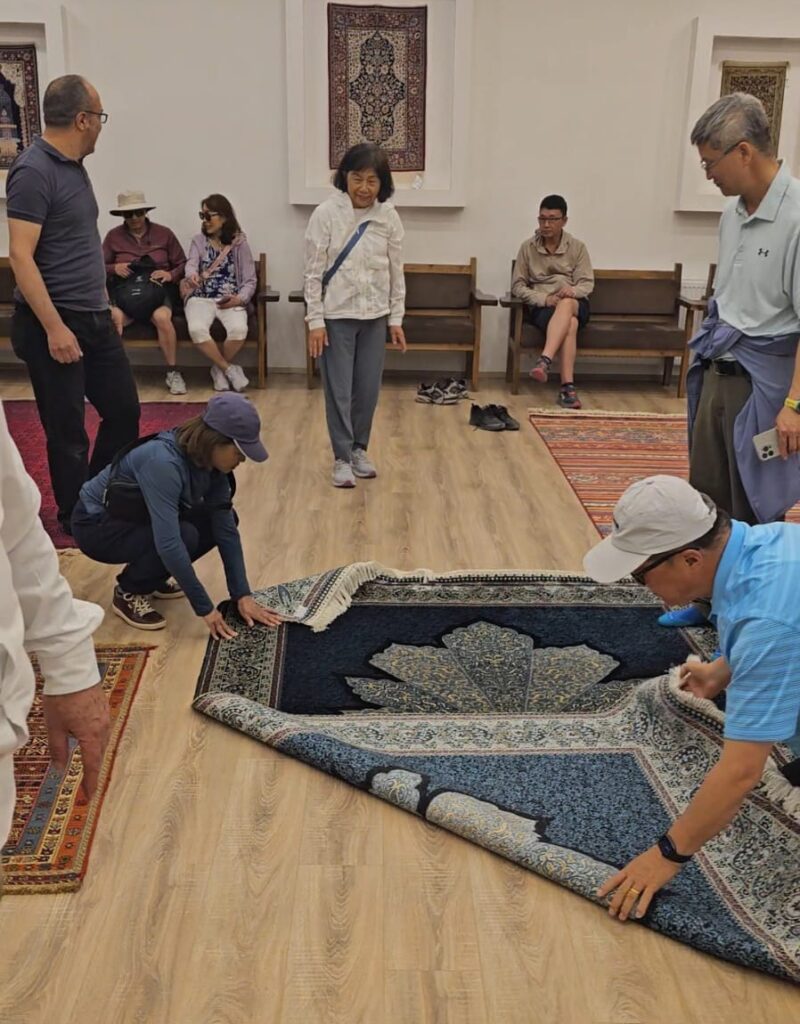
Why You Can Trust Felicity Travel for Carpet Shopping
At Felicity Travel, we take carpet shopping seriously. Our agency owner, Ertunga Ecir, worked for many years in various carpet shops during and after university, gaining deep knowledge about carpet art, authenticity and pricing. We only recommend trustworthy carpet shops where authenticity and quality are guaranteed. Visiting a carpet shop is a part of Turkish culture, not a tourist trap or commission-based sales opportunity. Every carpet purchased under our guidance is 100% hand-made and fairly priced, and our clients will never feel pressured or subjected to unfair bargaining. If any client has problems with their carpet, we promise a full refund without question.
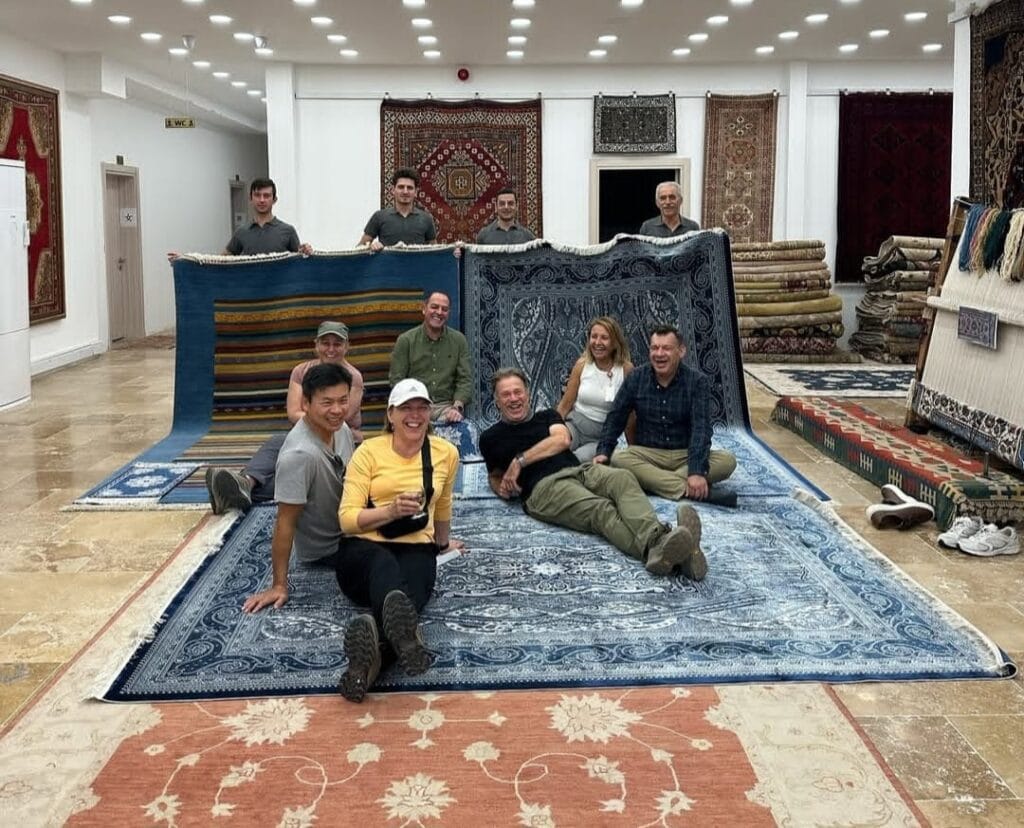
Tips for Tourists Before Buying a Carpet
Measure your space at home to ensure the carpet fits perfectly. Decide on preferred colors and patterns before traveling. Check the guarantee certificate: it should have a stamp and signature confirming authenticity. Do not worry about carrying: reputable shops offer secure shipping services worldwide. We ensure you receive a fair price and a genuine hand-made carpet.
Discovering Carpet Art During Your Tour
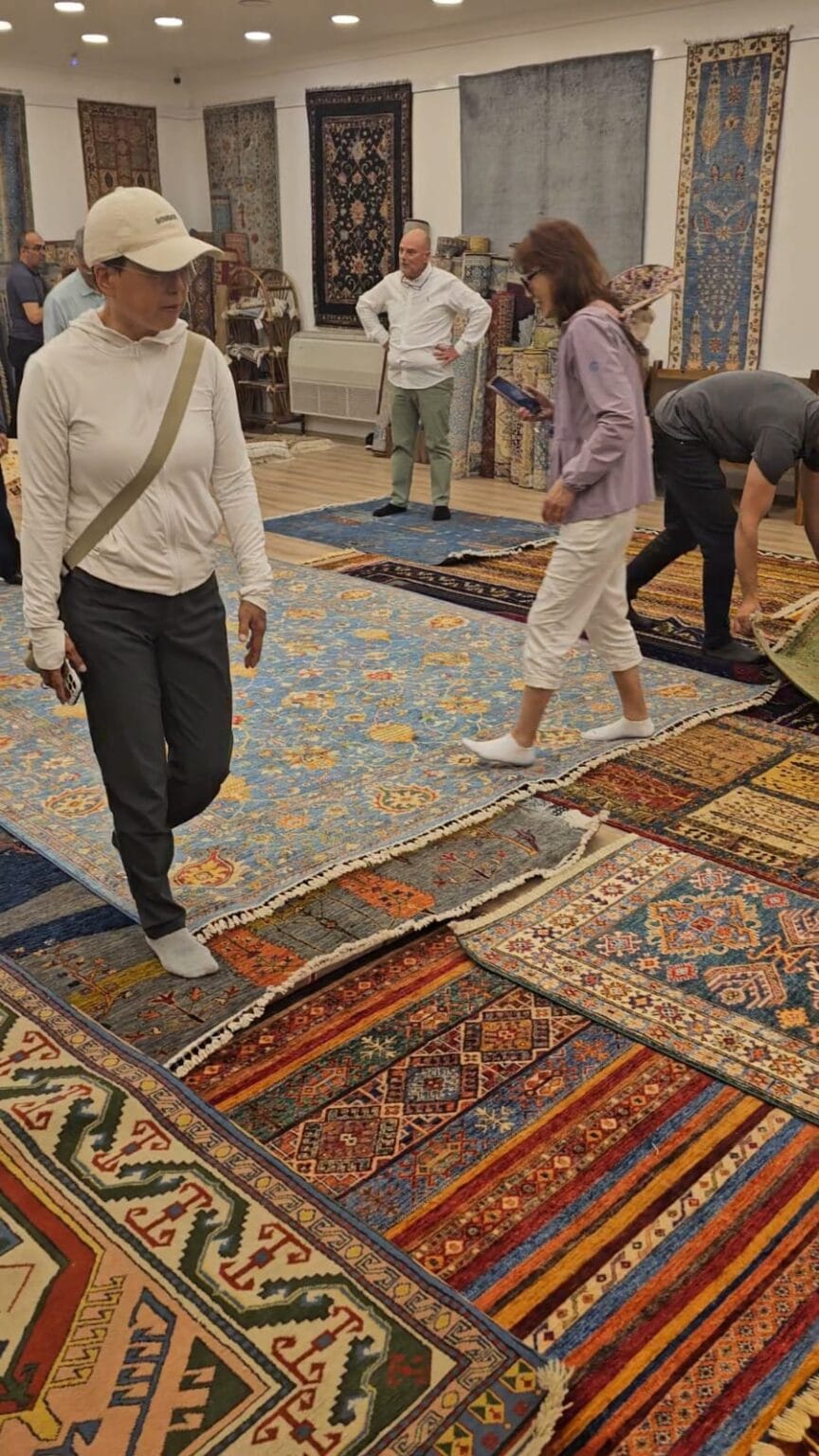
At Felicity Travel, we generally include carpet viewing as an optional activity in our itineraries. This allows guests who are not in the market for buying a carpet to enjoy a rich cultural experience.
During these visits, guests can:
Learn about the traditional process of carpet making, including how silk is extracted from cocoons and how wool was dyed in the old days; watch skilled artisans creating carpets by hand and learn how to make a knot under the guidance of craftswomen.
These visits are not a sales trap. Instead, they offer an insight into Turkish art and culture, allowing guests to experience the craftsmanship firsthand without any pressure to buy. Turkish carpets are living pieces of art and culture.
Frequently Asked Questions About Carpet Shopping in Turkey
- How can l know if my carpet is handmade?
Turn the carpet over.
Handmade: The knots on the back are not perfectly uniform. You can see slight irregularities in the weave. The design on the back is almost the same as the front, just a bit blurrier. The fringe is part of the carpet, not sewn on.
Machine-made: The back looks too perfect, almost like printed. Knots look like straight, regular rows. Design on the back looks pixel-like or grid-like. Fringe is sewn on after production
- How long does the shipping process take?
Delivery may take approximately 3 to 5 weeks.
- Will there be any additional charges upon receiving the package?
All charges are covered by the seller, so you will not have any extra costs.
- I have a dog and a cat at home. Is there anything I should be concerned about regarding the carpet?
Handmade wool carpets are very durable, so you don’t need to worry too much. They are tightly knotted, which makes them resistant to scratching, and natural wool is naturally stain-resistant. The only thing to keep in mind is to clean any spills quickly to protect the colors.
- How to Clean a Handmade Carpet
Vacuum using low suction (avoid the rotating brush). For small stains, gently blot with a clean cloth and a little cold water. If needed, use a small amount of mild soap (like baby shampoo). Do not scrub or use strong chemicals. Avoid steam cleaners and do not soak the carpet. For a full wash, use a professional rug cleaner who specializes in handmade carpets.
